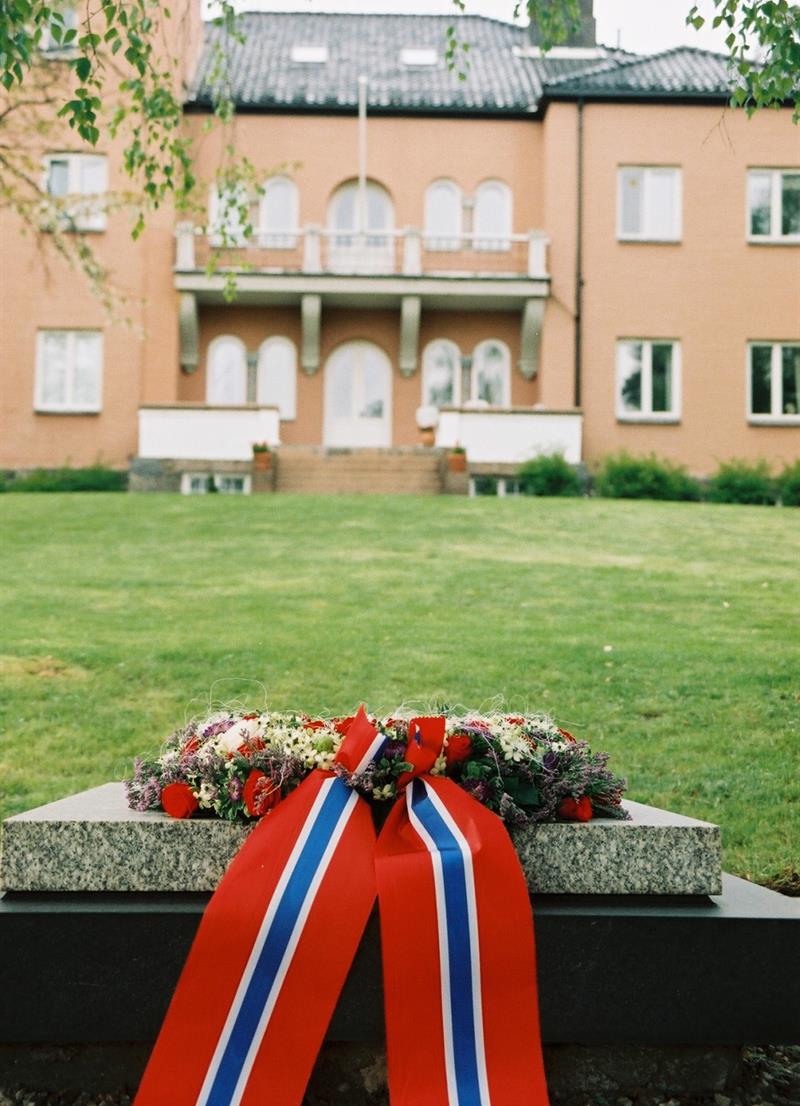
The garden is always open to visitors, but access to the house must be arranged beforehand.
Nansen lived at Polhøgda from its completion in 1901 until his death in 1930.
His grave is in the garden in front of the house.
Today Polhøgda is the home of the Fridtjof Nansen Institute, an independent foundation engaged in research on international environmental, energy and resource management politics.